Excellence Is Not a Project


Why sustainable excellence is built through operating models, not projects.
The strongest technology organizations do not treat excellence as a destination. They build it into the way they operate.
Every technology team I have worked with was excellent at starting projects. Far fewer were excellent at sustaining excellence once the project was complete.
As organizations grow, complexity grows with them. New initiatives introduce new systems, integrations, processes, and ways of working. Over time, architecture diverges, technical debt accumulates, operational overhead increases, and innovation becomes harder to scale consistently.
Most organizations recognize these challenges and launch a variety of improvement efforts. While often well intentioned, these initiatives frequently operate independently and struggle to create lasting change.
This article presents a practical framework for approaching technology excellence as an operating model rather than a collection of isolated initiatives.
A Different View: Technology Excellence as an Operating Model
A sustainable technology excellence model should connect strategy, execution, governance, learning, and culture. It should not exist only as a committee, a document library, or a periodic review forum. It should influence how teams think about architecture, how they manage operational health, how they evaluate innovation, and how they treat data as a long-term asset.
The most useful way I have found to organize this work is through four reinforcing pillars: secure and resilient architecture, operational excellence, innovation excellence, and data excellence. Each pillar addresses a different organizational risk. Together, they create a balanced system for long-term technology maturity.
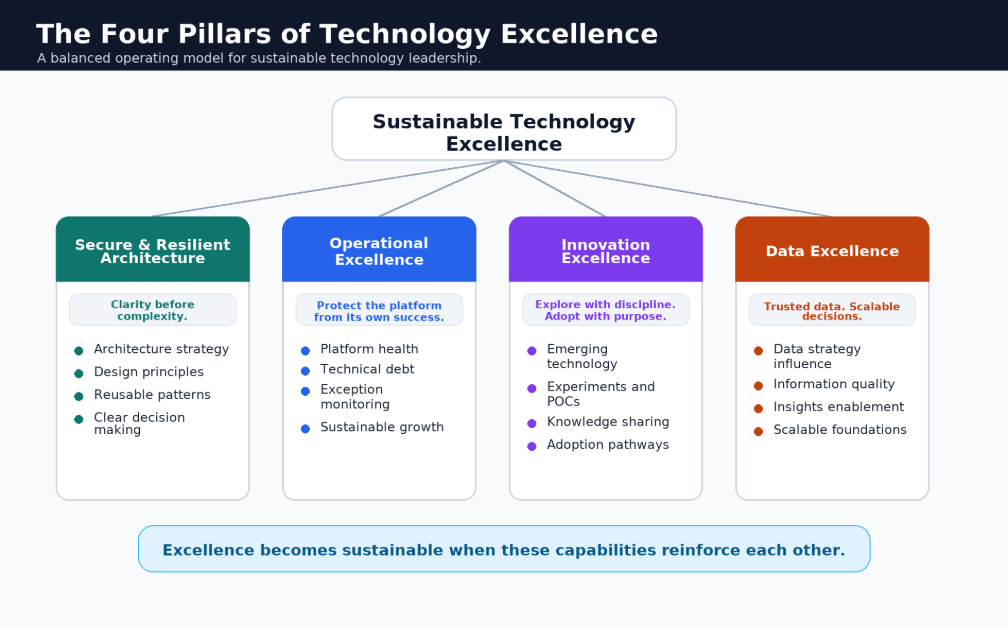
Figure 1. The four pillars and their guiding punch lines provide a balanced model for technology excellence.
Pillar 1: Secure and Resilient Architecture
Clarity before complexity.
The first pillar is architecture clarity. At its best, architecture is not a control function. Architecture reduces ambiguity. When architecture strategy, principles, and standards are unclear, different teams can solve similar problems in different ways. Over time, those differences become inconsistency, duplication, unnecessary complexity, and higher maintenance cost.
A strong architectural foundation gives teams a common language for decision making. It helps architects and engineers understand what “good” looks like before they begin designing. It provides reusable patterns where consistency matters and allows flexibility where context truly requires it. The objective is not to force every solution into the same shape. The objective is to create enough clarity so teams can move faster while making better decisions.
For this reason, architecture governance should not be positioned as a late-stage approval checkpoint. It should be an early guidance mechanism. The earlier teams understand design principles, integration expectations, security considerations, reuse opportunities, and maintainability expectations, the less likely they are to create expensive rework later.
Pillar 2: Operational Excellence
Protect the platform from its own success.
The second pillar is operational discipline. Growing platforms and applications generate exceptions, limits, dependencies, support needs, and lifecycle challenges. Some operational issues are avoidable through better design. Others are inevitable because technology platforms evolve, releases introduce changes, business usage grows, and integrations become more complex.
Operational excellence is the discipline of protecting a platform from its own success. A platform that supports more business activity must also be monitored, maintained, simplified, and continuously refined. Without that discipline, today’s successful delivery becomes tomorrow’s operational burden.
This pillar includes practices such as monitoring platform health, reviewing exceptions, managing technical debt, improving release discipline, strengthening development practices, and identifying areas where complexity can be reduced. The mindset is simple: sustainable delivery requires operational health. Teams cannot move fast for long if the underlying platform becomes fragile.
Pillar 3: Innovation Excellence
Explore with discipline. Adopt with purpose.
The third pillar is intentional innovation. Innovation should not depend on random curiosity or occasional spare time. In a mature technology organization, learning needs structure. New capabilities, platform releases, emerging technology trends, automation opportunities, and AI-enabled development approaches all need a way to be explored without creating uncontrolled sprawl.
An effective innovation model creates a safe space to evaluate new ideas, run focused experiments, share learning, and decide what deserves adoption. The goal is not to chase every new feature or technology trend. The goal is to build organizational awareness and convert the right innovations into practical capabilities.
This is especially important in the age of AI. AI is increasing the speed at which teams can generate code, documentation, designs, and analysis. That speed is valuable, but speed without judgment can amplify inconsistency and technical debt. Innovation excellence helps teams separate useful advancement from noise. It creates a disciplined path from exploration to adoption.
Pillar 4: Data Excellence
Trusted data. Scalable decisions.
The fourth pillar is data thinking. Many technology issues are downstream symptoms of weak data strategy, unclear ownership, inconsistent definitions, poor data quality, or fragmented information flows. Even when enterprise data strategy is owned at a broader organizational level, technology teams still have an important role to play within their sphere of influence.
Data excellence does not require every team to own the entire enterprise data strategy. It requires teams to recognize that architecture and data cannot be separated. Every integration, workflow, reporting need, automation, AI use case, and customer or employee experience depends on how data is modeled, governed, accessed, and trusted.
For many teams, the practical starting point is to identify the data areas they can shape: data quality, metadata discipline, information architecture, archival considerations, reporting readiness, and the design of integrations that avoid unnecessary duplication. The work may start small, but ignoring data as part of technology excellence creates long-term constraints.
From Standards to Culture
A technology excellence model often matures in phases. The first phase is foundational. Teams need standards, best practices, engineering conventions, reusable patterns, and enough documentation to create a shared baseline. Without that foundation, governance can become opinion-driven because teams have no common reference point.
The second phase is operationalization. Once standards exist, the work shifts toward applying them consistently through governance rhythms, health monitoring, innovation lifecycles, technical debt management, and clearer ownership. This is where improvement work starts becoming part of how the organization operates.
The third phase is cultural adoption. This is when the most important shift happens. Teams begin to ask different questions. Instead of only asking how quickly something can be built, they start asking whether the solution is the right way to build it. Instead of defaulting to new components, they ask whether something reusable already exists. Instead of waiting for a central group to enforce standards, they begin applying the principles themselves.
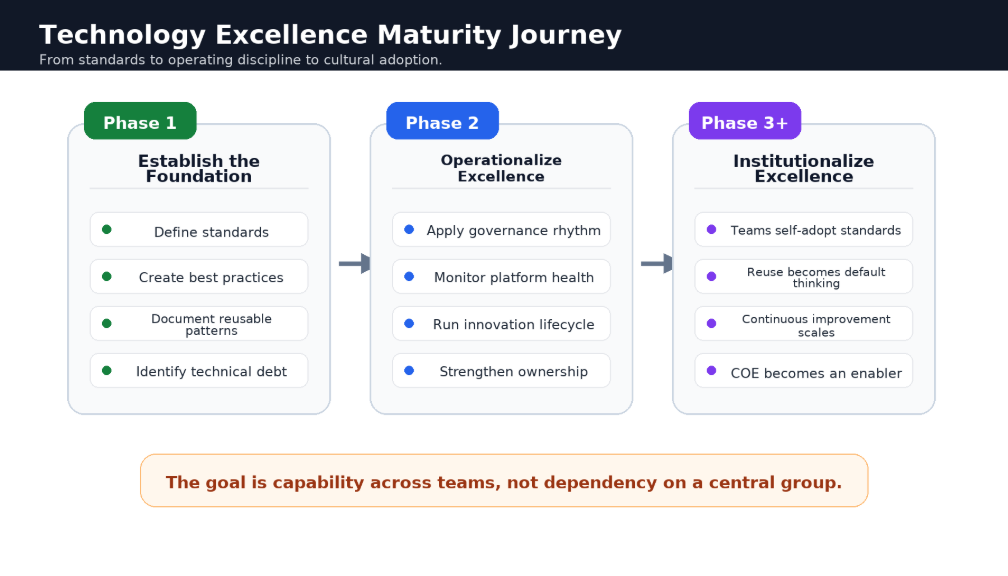
Figure 2. A maturity journey moves from foundational standards to self-sustaining engineering culture.
Creating the Operating Rhythm
Excellence does not become real because a roadmap exists. It becomes real when a roadmap is translated into action, ownership, review, feedback, and refinement. This is where operating rhythm matters.
A practical rhythm connects annual objectives to quarterly focus areas, monthly action items, named owners, recurring reviews, measurable outcomes, and continuous refinement. The individual cadence can vary by organization, but the principle is consistent: strategy must be broken down into manageable work that someone owns and that the group reviews often enough to maintain momentum.
This rhythm also creates accountability without turning the model into bureaucracy. The point is not to ask for status for the sake of status. The point is to keep improvement work visible, ensure owners have support, remove ambiguity, identify blockers, and adjust the roadmap as learning occurs.
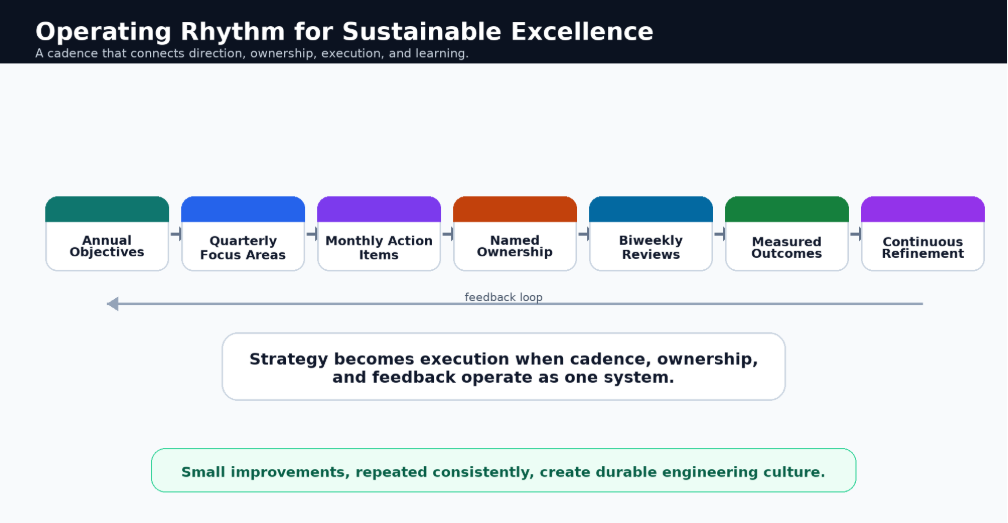
Figure 3. A repeatable rhythm helps convert strategy into execution and learning.
What Success Looks Like
The success of a technology excellence model should not be measured only by activity. Activity metrics are easy to collect: number of meetings held, number of standards created, number of reviews completed, number of documents published. These indicators may show that work is happening, but they do not prove that behavior is changing.
The stronger indicators are behavioral. Teams begin reusing before building. Architects make decisions using shared principles. Engineers raise maintainability concerns earlier. Technical debt becomes visible before it becomes urgent. Innovation becomes structured rather than random. Data quality and information flow become part of design conversations. Standards are applied because teams see their value, not only because someone is enforcing them.
The strongest sign of maturity is not that every decision goes through a central group. It is that teams begin making better decisions without needing constant escalation.
Common Mistakes to Avoid
The first mistake is treating a Center of Excellence as a governance function only. When the central message becomes approval, control, or compliance, teams can begin to see the model as a blocker. Governance is necessary, but governance should create clarity and confidence, not friction.
The second mistake is producing too much documentation without sufficient adoption. Documentation is useful when it helps people make decisions. It becomes waste when it exists only to prove that a standard was written.
The third mistake is separating improvement work from delivery work. If teams view excellence as additional work that competes with delivery, it will struggle for attention. The better approach is to show how engineering standards, operational health, reuse, innovation, and data discipline directly improve delivery quality and long-term speed.
The fourth mistake is measuring the wrong things. A model can appear successful on paper while failing to change team behavior. The real question is whether the organization is making better decisions, reducing avoidable complexity, improving reuse, increasing stability, and learning faster.
Lessons Learned
The most important lesson is that excellence is a cultural outcome, not merely a process outcome. Standards, governance, roadmaps, and reusable patterns all matter, but their ultimate purpose is to influence how teams think, make decisions, and continuously improve.
Another lesson is that excellence does not emerge from vision alone. Ideas must be translated into priorities, ownership, execution, and continuous reinforcement.
Finally, sustainable improvement requires patience. The strongest operating models evolve over time, growing from foundational practices into organizational habits.
Final Reflection
Technology organizations often focus on delivering solutions, and rightly so. But the highest-performing organizations also invest in improving how those solutions are created. They recognize that architecture quality, operational health, innovation discipline, and data thinking are not separate conversations. They are connected capabilities that determine whether technology can scale sustainably.
A Center of Excellence, or any similar improvement model, should not create dependency. It should create capability. It should help teams internalize principles, make better decisions, reuse more intelligently, manage operational health proactively, and approach innovation with discipline.
In that sense, excellence is not a project. It is a system of thinking, operating, learning, and improving. When that system becomes part of the culture, technology organizations move beyond delivering more work. They begin delivering better outcomes with greater consistency and resilience.
Continue the Conversation
Technology excellence looks different in every organization, but the fundamental challenge is remarkably similar: how do we build systems that continuously improve rather than temporarily succeed?
If this framework resonates with your experience, I'd love to hear how your organization approaches technology excellence. What has worked well? What challenges have you encountered?
Connect with me on LinkedIn or leave a comment below and continue the conversation.